The CD Mavica Series
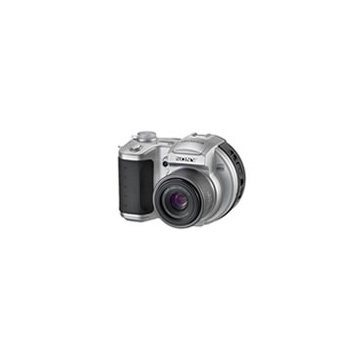
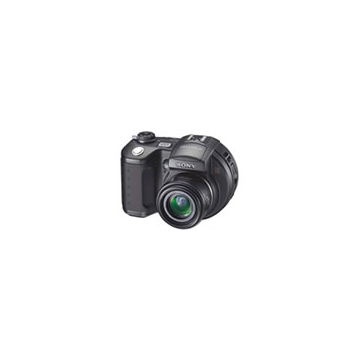
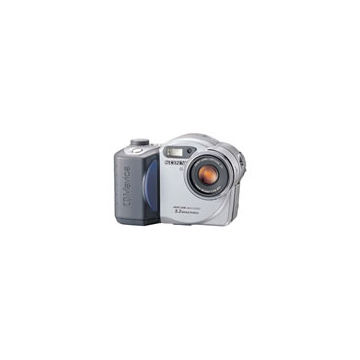
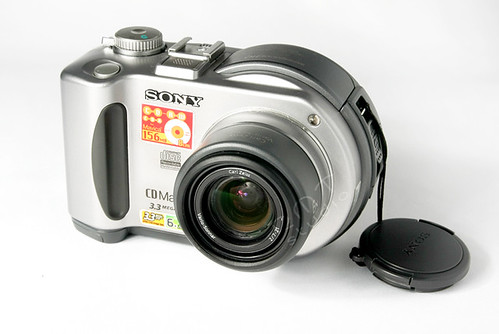
A guide to Sony's CD Mavica line (2001–2003) — the seven models that replaced floppy disks with 8cm CD-R media and pushed the Mavica brand to its highest resolutions.
The CD era
By 2000, the 1.44 MB floppy disk was clearly too small for the megapixel images that digital cameras were producing. Sony's solution for the Mavica line was to switch to 8cm CD-R discs — offering over 100× the storage capacity of a floppy in a disc only slightly larger than the existing floppy media slot.
The CD Mavica series ran from 2001 to 2003 and comprised seven models before Sony discontinued the Mavica brand entirely.
The lineup
CD200 (2001)
- Resolution: 2.1 MP (1600 × 1200)
- Sensor: 1/2.7" CCD
- Zoom: 3× optical (f/2.8–3.1)
- Media: CD-R only
- Key feature: First CD Mavica — proved the concept
The CD200 was the entry point. Its 3× optical zoom and 2.1 MP sensor were competitive for a consumer camera in 2001. The major selling point was never running out of storage on a long trip — 156 MB of CD-R space held hundreds of standard-quality images.
CD250 (2001)
- Resolution: 2.1 MP (1600 × 1200)
- Sensor: 1/2.7" CCD
- Zoom: 3× optical (f/2.8–3.1)
- Media: CD-R only
- Key feature: Cost-reduced version of CD200
Functionally nearly identical to the CD200 with minor cosmetic differences and a lower price point.
CD300 (2002)
- Resolution: 3.3 MP (2048 × 1536)
- Sensor: 1/1.8" CCD
- Zoom: 3× optical Carl Zeiss (f/2.8–3.4)
- Media: CD-R and CD-RW
- Key feature: First CD Mavica with Carl Zeiss lens and CD-RW support
The CD300 was a significant step up. The 1/1.8" CCD sensor was the largest ever used in a Mavica, and the Carl Zeiss Vario-Sonnar lens delivered noticeably sharper images than the Sony-branded lenses on earlier models. CD-RW support meant you could erase and reuse discs.
CD350 (2002)
- Resolution: 3.2 MP (2048 × 1536)
- Sensor: 1/2.7" CCD
- Zoom: 3× optical (f/2.8–3.1)
- Media: CD-R and CD-RW
- Key feature: Budget alternative to CD300
The CD350 offered similar resolution to the CD300 but with a smaller sensor and a standard Sony lens — a tradeoff for a lower price.
CD400 (2002)
- Resolution: 4.0 MP (2272 × 1704)
- Sensor: 1/1.8" CCD
- Zoom: 3× optical Carl Zeiss (f/2.8–3.4)
- Media: CD-R and CD-RW
- Key feature: Highest resolution at launch, Carl Zeiss lens
The CD400 pushed resolution higher while keeping the excellent Carl Zeiss lens. At 4 MP, images were detailed enough for decent 8 × 10" prints.
CD500 (2003)
- Resolution: 5.0 MP (2592 × 1944)
- Sensor: 1/1.8" CCD
- Zoom: 3× optical Carl Zeiss (f/2.8–3.4)
- Media: CD-R and CD-RW
- Key feature: Highest-resolution Mavica ever made
The CD500 represents the pinnacle of Mavica image quality. Its 5 MP sensor and Carl Zeiss lens produced the sharpest, most detailed images of any camera to carry the Mavica name. By modern standards it is modest, but in context it was the culmination of 22 years of Mavica evolution.
CD1000 (2003)
- Resolution: 2.1 MP (1600 × 1200)
- Sensor: 1/2.7" CCD
- Zoom: 10× optical (f/2.8–3.6)
- Media: CD-R and CD-RW
- Key feature: 10× zoom + EVF — the superzoom CD Mavica
The CD1000 traded resolution for zoom range. Its 10× optical zoom (37–370 mm equivalent) and electronic viewfinder made it the most versatile CD Mavica for wildlife and sports. It was also the last Mavica model produced.
Shared characteristics
All CD Mavica models share:
- InfoLithium NP-F battery system (same as floppy models)
- USB connectivity for direct computer transfer
- JPEG output (no RAW or TIFF)
- Compact Flash size slot for optional Memory Stick via adapter
- MPEG movie mode for short video clips written to disc
Carl Zeiss vs Sony lenses
The CD300, CD400, and CD500 feature Carl Zeiss Vario-Sonnar lenses — the same brand used on Sony's premium Cyber-shot line. These lenses have:
- Higher optical resolution (more line pairs per mm)
- Better contrast, especially at the edges of the frame
- Superior lens coatings that reduce flare and ghosting
The CD200, CD250, CD350, and CD1000 use standard Sony-branded lenses that are adequate but noticeably softer in direct comparison.
Why CD Mavica didn't survive
Despite the storage advantage, CD Mavica cameras faced several challenges:
- Bulk: The CD drive mechanism made the cameras significantly thicker than compact cameras using SD or CF cards.
- Spin-up time: The CD drive needed ~2 seconds to spin up before writing, adding to shot-to-shot delay.
- Disc durability: CDs scratch more easily than flash media and are vulnerable to fingerprints on the data surface.
- Market shift: By 2003, CF and SD cards offered gigabytes of storage in a fraction of the size. The physical-media concept was obsolete.
- Sony's own competition: Sony's Cyber-shot line using Memory Stick was smaller, faster, and increasingly affordable.
Sony discontinued the entire Mavica brand in 2003. The CD1000 was the last model produced, ending a 22-year lineage that began with the original analog Mavica in 1981.
Collector's perspective
CD Mavica models are generally more affordable than the popular floppy models on the second-hand market. The CD500 and CD1000 command the highest prices due to their flagship status. The CD300 offers the best value for image quality per dollar.
Related Knowledge
8cm CD-R & CD-RW Mini Disc
The 8cm mini CD-R and CD-RW discs used by Sony's CD Mavica cameras — capacity, compatibility, sourcing, and practical tips for shooting in 2025+.
Storage & MediaMavica Model Numbering: Decoding FD, CD, MVC & DKC
Sony used a systematic naming convention across the Mavica family — FD, CD, MVC, and DKC prefixes each denote a camera's storage format, era, and intended market. Here's how to read any Mavica model number.
History & CultureThe Digital Floppy Camera Era
How Sony's radical decision to use floppy disks as camera storage created a cultural phenomenon from 1997 to 2002.
History & CultureY2K Aesthetic & the Mavica: Late-90s Nostalgia in Digital Form
The Y2K aesthetic — a design and cultural movement celebrating the visual language of 1997–2003 — has placed the Sony Mavica at its centre. Chunky silver electronics, pixelated images, floppy disks, and iMac-era optimism: the Mavica embodies the era.
History & CultureSony Mavica Timeline (1981–2003)
The complete chronological history of the Sony Mavica lineup — from the 1981 still-video prototype to the final CD-burning models.
History & CultureCD-R Laser Calibration: Maintaining Disc-Series Mavica Writers
The CD Mavica series (CD200–CD1000) contains a miniature CD-R/RW writer that burns images directly to 8cm mini discs. Over time, the laser diode degrades and the optical assembly collects dust, leading to write failures. This guide covers diagnosis, cleaning, and the limits of field calibration.
Repair & Restoration