Mavica in Pop Culture: Film, TV, Music & Art
The Sony Mavica has appeared in films, television shows, music videos, and contemporary art — sometimes as a plot device, sometimes as a visual prop, and increasingly as a deliberate artistic tool. This article catalogues the Mavica's cultural footprint.
The Mavica on screen
Film
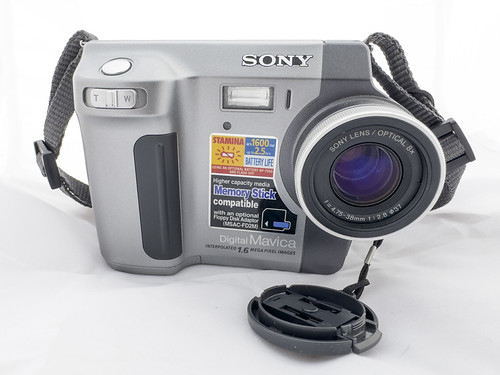
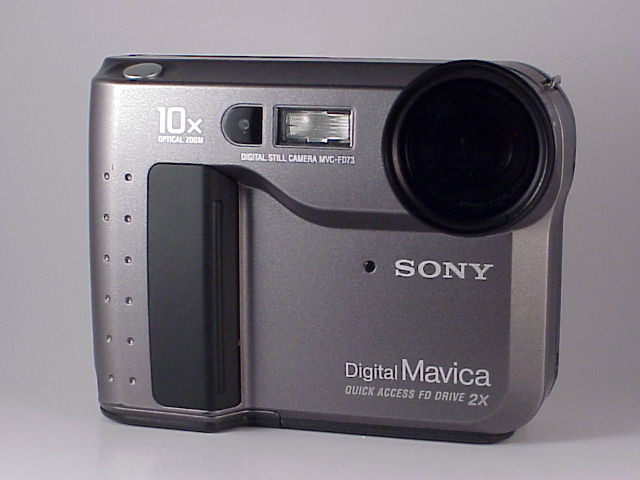
The Mavica's distinctive form factor — large body, visible floppy disk slot, flip-out LCD — makes it immediately recognisable on screen. It has appeared in:
Period-accurate appearances (films set in 1997–2003)
Films set during the Mavica's production era occasionally feature the camera as a period-accurate prop:
- Thriller and crime films: The Mavica's ability to capture images to removable media (floppy disk) creates natural plot devices — evidence can be physically stolen, hidden, or destroyed by removing the disk. Several late-90s and early-2000s thrillers used this mechanic.
- Coming-of-age films: Characters in late-90s-set stories use Mavica cameras as the era-appropriate way to take photos at parties, school events, and road trips. The physical floppy disk exchange becomes a meaningful prop — handing someone a floppy with photos on it is more cinematically interesting than AirDropping a file.
Deliberate anachronism
Modern films and shows sometimes include Mavica cameras as deliberate anachronisms or stylistic choices:
- A character using a floppy Mavica in a contemporary setting immediately signals "nostalgic," "quirky," or "deliberately analogue"
- The camera's chunky, mechanical operation provides visual and auditory texture — the floppy drive whirring, the disk ejecting — that modern cameras lack
Television
Television's relationship with the Mavica is similar to film, with additional contexts:
- Reality TV: Some photography-themed reality shows have featured Mavica challenges — shoot a creative brief with limited technology
- Documentary: Documentaries about late-90s technology, the early internet, and digital manufacturing history frequently show Mavica cameras as representative products of the era
- Unboxing and review content: YouTube's vast library of Mavica review videos constitutes a pop-culture phenomenon in its own right — with some videos exceeding a million views
Music videos
The Mavica aesthetic — pixelated, lo-fi, warm — lends itself naturally to music video production:
- Indie and alternative artists have used Mavica cameras (or Mavica-style post-processing) for music videos that evoke late-90s visual culture
- The composite video output of Mavica cameras can be recorded directly to VHS or through capture devices, creating an authentic analogue-degradation chain that digital filters cannot replicate
- Album artwork: The distinct Mavica colour palette and resolution have been used for album covers, single artwork, and promotional images by independent artists
The Mavica in contemporary art
Photography exhibitions
The Mavica has been the subject of dedicated photography exhibitions:
- "Floppy Disk Photography" as a concept has been exhibited in galleries as both a technical curiosity and a legitimate artistic medium
- Print scale: Mavica images (640×480 on early models) printed at large scale reveal their pixel structure, creating an effect similar to pointillism or mosaic. Some artists have printed Mavica images at poster size, transforming the pixel grid into an intentional aesthetic element.
- Series work: Several contemporary photographers have produced sustained bodies of work shot exclusively on Mavica cameras, presenting them in gallery contexts alongside artist statements about constraint, obsolescence, and the relationship between technology and seeing
Mixed media and installation
- Camera-as-sculpture: The Mavica's physical form — chunky, machined, unmistakably late-90s — makes it a compelling sculptural object. It has appeared in installations about obsolescence, technological waste, and the materiality of digital culture.
- Interactive installations: Some artists have set up Mavica cameras with live composite video output to CRT monitors, creating an immersive late-90s capture experience as an art installation
- Floppy disk art: The physical floppy disks produced by Mavica cameras have been used as art objects — labelled, archived, displayed in cases, and sold as limited-edition photograph-objects (a single image on a physical disk, the "negative" and "print" combined)
Zine culture
The Mavica has found a natural home in the zine community:
- Photo zines: Self-published photography zines shot on Mavica cameras have become a niche format, typically printed in small runs on risograph or photocopier
- The resolution advantage: At zine printing sizes (typically A5 or smaller), Mavica resolution is actually adequate. A 640×480 image printed at 4×3 inches yields 160 PPI — acceptable for zine-quality printing.
- Distribution: Some zine makers include a floppy disk with digital versions of the images alongside the physical zine — a multimedia package that is itself an artifact
The Mavica in advertising and marketing
Nostalgic marketing
Brands targeting Millennial and Gen Z audiences have occasionally featured Mavica cameras (or Mavica-style imagery) in marketing campaigns:
- Fashion brands: Vintage clothing and Y2K fashion brands use Mavica-shot lookbooks
- Music labels: Independent labels use Mavica imagery for artist promotion
- Tech companies: Ironically, some tech companies have used Mavica imagery in campaigns about "how far we've come" — though this framing is increasingly seen as tone-deaf by the Mavica-using community, who view the cameras as useful tools, not punchlines
The Mavica as brand signifier
Simply including a Mavica in a photograph communicates a specific set of values:
- Appreciation for physical media and tangible objects
- Rejection (or at least questioning) of the megapixel arms race
- Membership in a lo-fi / retro-tech community
- Deliberate creative constraint as a practice
Internet culture
Memes
The Mavica has generated its own meme ecosystem:
- "Shot on Mavica" as a caption format (applied to obviously low-resolution images)
- The floppy disk eject as a reaction format
- Comparisons between Mavica spec sheets and modern phone camera specs (played for comedic contrast)
- The recurring joke about Mavica cameras having "the best colour science" (which is, sincerely, partially true — CCD colour rendition genuinely has characteristics that CMOS sensors handle differently)
Social media communities
Online Mavica communities have grown significantly:
- Instagram: #MavicaPhotography, #ShotOnMavica, #FloppyDiskCamera
- Reddit: r/mavica, r/vintagedigitalcameras
- Discord: Multiple active servers dedicated to Mavica photography and collecting
- TikTok: Mavica unboxing and first-shoot videos regularly achieve viral view counts
The "Mavica aesthetic" as a genre
A visual genre has emerged that can be called the "Mavica aesthetic" — whether or not a Mavica was actually used to make the image. Characteristics include:
- Low resolution (640×480 or similar)
- Visible JPEG compression artifacts
- Warm, saturated CCD colour palette
- Slight softness from low-quality optics
- Metadata timestamps in the late-1990s date format
This aesthetic has been replicated by software filters, but practitioners generally agree that actual Mavica images have a quality that filters don't capture — likely due to the genuine optical characteristics, CCD noise floor, and JPEG encoder specifics that are unique to each camera.
Why the Mavica endures
Other cameras of the same era — the Apple QuickTake, the Casio QV-10, the Kodak DC25 — were equally primitive. Yet the Mavica dominates the cultural conversation. The likely reasons:
- The floppy disk: No other camera used such a universally recognised medium. The QuickTake stored to internal memory (invisible); the Mavica stores to a physical disk you can hold, label, and share.
- Sony branding: The Sony name carries cultural weight that Casio and early Kodak digital don't.
- Volume: Sony sold millions of Mavica cameras. They are everywhere — at thrift stores, estate sales, and online. Rarity kills cultural impact; ubiquity enables it.
- Usability: A Mavica still works today with no adapters, software, or workarounds. Insert disk, turn on, shoot, eject. This zero-friction usability makes it accessible to anyone, including people with no technical knowledge.
- Community: The self-reinforcing cycle of community creation — more people shoot Mavica → more content → more interest → more people shoot Mavica — has reached critical mass.
Related Knowledge
Lo-Fi Aesthetic
The intentional embrace of technical imperfection — low resolution, heavy compression, and CCD character — as an artistic choice.
TechniquesThe Retro-Tech Revival
How and why a new generation of photographers is rediscovering vintage digital cameras as creative tools.
History & Culture3.5" Floppy Disk Photography
How Sony Mavica cameras used standard 1.44 MB floppy disks as their primary storage medium — constraints, workflow, and charm.
Storage & MediaY2K Aesthetic & the Mavica: Late-90s Nostalgia in Digital Form
The Y2K aesthetic — a design and cultural movement celebrating the visual language of 1997–2003 — has placed the Sony Mavica at its centre. Chunky silver electronics, pixelated images, floppy disks, and iMac-era optimism: the Mavica embodies the era.
History & CultureThe #ShittyCameraChallenge: Lo-Fi Photography as a Movement
The #ShittyCameraChallenge is a social media movement celebrating the creative potential of cheap, old, and technically limited cameras — including the Sony Mavica. What started as a hashtag became a philosophy: that compelling images come from the photographer, not the gear.
History & CultureSony Mavica Timeline (1981–2003)
The complete chronological history of the Sony Mavica lineup — from the 1981 still-video prototype to the final CD-burning models.
History & Culture