The #ShittyCameraChallenge: Lo-Fi Photography as a Movement
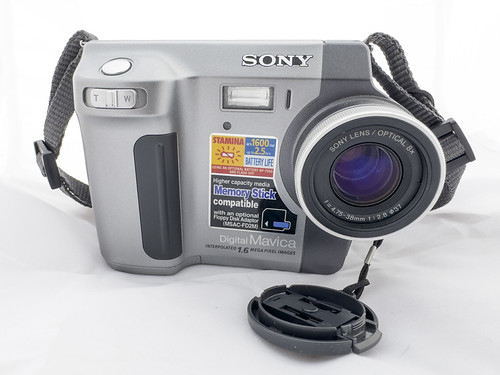
The #ShittyCameraChallenge is a social media movement celebrating the creative potential of cheap, old, and technically limited cameras — including the Sony Mavica. What started as a hashtag became a philosophy: that compelling images come from the photographer, not the gear.
What is the #ShittyCameraChallenge?
The #ShittyCameraChallenge is a social media photography movement — primarily on Instagram, Flickr, and Tumblr — where participants deliberately shoot with cheap, outdated, or technically "bad" cameras. The goal is not to produce technically perfect images, but to explore what happens when you remove modern camera technology from the equation and rely purely on composition, timing, and creativity.
The "rules" (such as they are) are simple:
- Use a cheap or obsolete camera — typically under $50, often under $20
- Shoot seriously — treat it as a real photographic exercise, not a joke
- Share the results with the hashtag, noting the camera used
- No apologising — the aesthetic is the point, not a deficiency
Origins
The hashtag emerged organically in the early-to-mid 2010s across multiple photography communities simultaneously. There is no single originator — it grew from a shared sentiment:
- Film photography revival: As film photography experienced a renaissance in the 2010s, interest extended from "serious" film cameras to toy cameras, disposables, and oddities
- Lomography influence: The Lomographic Society had spent two decades celebrating lo-fi cameras (Holga, Diana, LOMO LC-A). The #ShittyCameraChallenge extends this philosophy to digital cameras.
- Reaction to gear culture: Photography forums and social media had become dominated by gear discussions — megapixel counts, dynamic range charts, lens sharpness tests. The challenge was a deliberate rejection of this: what if the gear doesn't matter?
- Thrift store culture: The rise of thrift shopping and "vintage" culture created a pipeline of cheap old cameras finding new owners
Why the Mavica is a #ShittyCameraChallenge icon
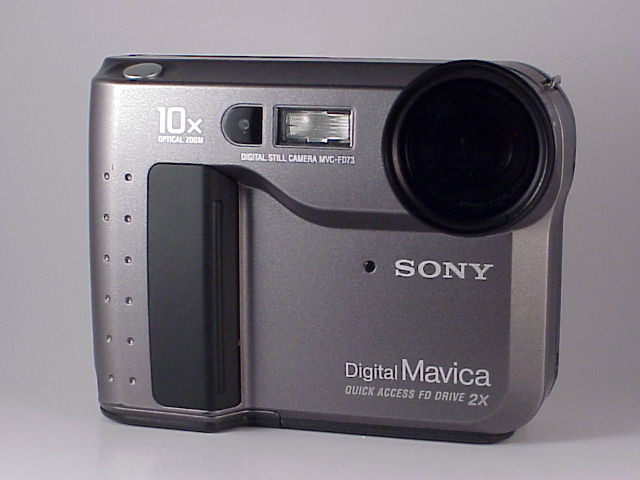
The Sony Mavica — particularly the floppy disk models — has become one of the most recognisable cameras in the movement. Several factors:
The floppy disk factor
Nothing says "obsolete" like saving photos to a 3.5" floppy disk. The physical act of ejecting a floppy from a camera is inherently entertaining and visually distinctive. On social media, photos of floppy disks protruding from a camera generate immediate engagement.
The aesthetic
Mavica images have a distinct look that no Instagram filter can accurately replicate:
- Low resolution (640×480 on early models) creates an inherently pixelated, chunky image
- Heavy JPEG compression (to fit on a 1.44 MB disk) adds characteristic blocking artifacts
- CCD colour rendition produces warm, saturated colours distinct from modern CMOS sensors
- Limited dynamic range blows highlights and crushes shadows in a characteristic way
- No image stabilisation (on most models) means the photographer must work with available light and steady hands
The price
Floppy Mavica cameras are among the cheapest functional digital cameras available:
| Model | Typical price (2024–2026) |
|---|---|
| FD5 | $10–$25 |
| FD7 | $15–$30 |
| FD71–FD75 | $20–$50 |
| FD81–FD87 | $25–$60 |
| FD88–FD92 | $30–$70 |
At these prices, the barrier to participation is almost zero.
The constraint
The floppy disk's 1.44 MB capacity forces extreme constraint:
- 15–20 shots per disk at Fine quality on an FD7
- 4–7 shots per disk at Fine quality on an FD90 (1.3 MP = larger files)
This limitation transforms the shooting experience. You can't spray 200 frames and pick the best one. Every shot is deliberate. Every shutter press is a commitment. This constraint is widely cited by participants as the most valuable aspect of shooting with a Mavica.
The community
The #ShittyCameraChallenge hashtag on Instagram has accumulated hundreds of thousands of posts. Mavica shots are among the most frequently featured. Related hashtags:
- #MavicaPhotography — dedicated Mavica community
- #FloppyDisk — often crossposted
- #DigitalLoFi — broader digital lo-fi aesthetic
- #ShootFilmShootDigital — bridging film and lo-fi digital communities
Flickr
Flickr groups dedicated to the challenge include thousands of members. The Flickr format (larger image display, detailed EXIF data, group discussions) is well-suited to the community's interest in the cameras themselves, not just the images.
YouTube
Several YouTube creators have produced popular videos shooting with Mavica cameras as part of the challenge:
- "I shot a wedding with a floppy disk camera"
- "Street photography with a $15 camera"
- "Can a 1997 camera take good photos?"
These videos have collectively garnered millions of views and are a significant pipeline for new Mavica owners.
The r/shittycamerachallenge subreddit and related communities (r/mavica, r/vintagedigitalcameras) maintain active discussion threads, image sharing, and camera buying advice.
Philosophy: constraint as creative fuel
The deeper appeal of the #ShittyCameraChallenge goes beyond nostalgia or novelty. It connects to a well-established creative principle: constraints breed creativity.
When you shoot with a Mavica:
- You can't rely on resolution to capture fine detail — you must compose for big shapes, strong contrasts, and clear subjects
- You can't rely on burst mode — you learn to anticipate the moment
- You can't rely on post-processing — the heavy JPEG compression means what the camera produces is essentially final
- You can't rely on dynamic range — you learn to read light and expose carefully
These are foundational photographic skills. The Mavica, by removing every modern crutch, forces the photographer to develop them.
Criticism and response
"It's just nostalgia"
Response: Partly, yes. Nostalgia is a legitimate creative impulse. But the constraint-based creativity and the distinct visual output offer genuine artistic value beyond mere sentimentality.
"The images are objectively terrible"
Response: By technical metrics (resolution, noise, dynamic range), yes. But technical perfection has never been the sole criterion for good photography. The images are honest, deliberate, and compositionally strong — because the camera demands it.
"You could just add a filter"
Response: You could — but the experience is fundamentally different. The physical constraint (15 shots per disk, 10-second write time, no chimping through hundreds of frames) shapes the creative process. The output is a product of the process, not just a visual style.
Getting started
- Buy a floppy Mavica: FD7 or FD73 are the best entry points — cheap, reliable, with flash
- Buy floppy disks: New old stock or used-reformatted. Budget for 5–10 disks to start.
- Shoot a roll: Treat each floppy like a roll of film. Go out with one disk and come back with 15–20 images.
- Share: Post to Instagram, Flickr, or MaviCats with the relevant hashtags
- Enjoy the process: The point is not the pixels. The point is the act of seeing.
Related Knowledge
Lo-Fi Aesthetic
The intentional embrace of technical imperfection — low resolution, heavy compression, and CCD character — as an artistic choice.
TechniquesThe Retro-Tech Revival
How and why a new generation of photographers is rediscovering vintage digital cameras as creative tools.
History & Culture3.5" Floppy Disk Photography
How Sony Mavica cameras used standard 1.44 MB floppy disks as their primary storage medium — constraints, workflow, and charm.
Storage & MediaJPEG Compression on Mavica
How the Mavica's aggressive JPEG compression shapes its distinctive image character — artifacts as aesthetic.
Storage & MediaY2K Aesthetic & the Mavica: Late-90s Nostalgia in Digital Form
The Y2K aesthetic — a design and cultural movement celebrating the visual language of 1997–2003 — has placed the Sony Mavica at its centre. Chunky silver electronics, pixelated images, floppy disks, and iMac-era optimism: the Mavica embodies the era.
History & CultureMavica in Pop Culture: Film, TV, Music & Art
The Sony Mavica has appeared in films, television shows, music videos, and contemporary art — sometimes as a plot device, sometimes as a visual prop, and increasingly as a deliberate artistic tool. This article catalogues the Mavica's cultural footprint.
History & Culture