Filter Threads & Lens Accessories
Which Mavica models have filter threads, what sizes they use, and what photographic filters and conversion lenses you can attach.
What is a filter thread?
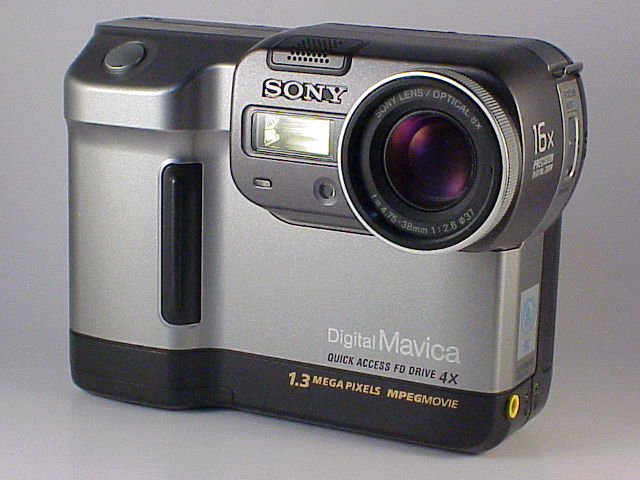
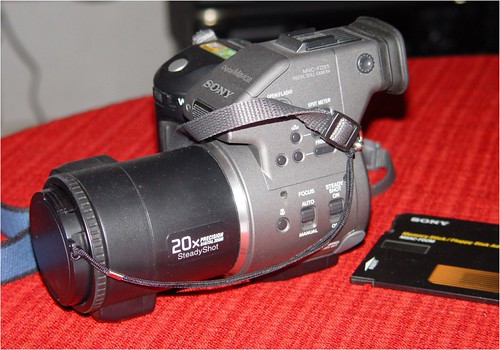
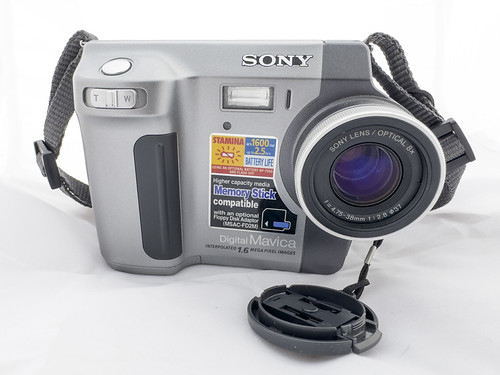
A filter thread is a screw-in ring machined into the front of the lens barrel. It allows you to attach glass filters, lens adapters, and conversion lenses. Not all Mavica models have one — only the mid-range and higher-end models include this feature.
Filter thread sizes on Mavica cameras
| Thread Size | Models |
|---|---|
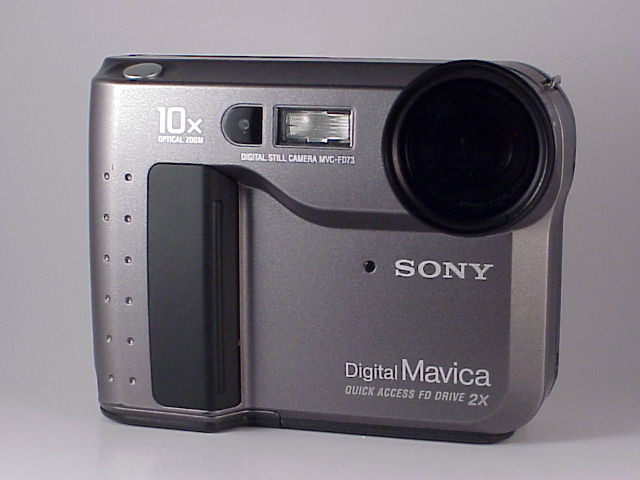
| 37 mm | FD73, FD75, FD81, FD83, FD85, FD87, FD100, FD200, CD200, CD250, CD350 |
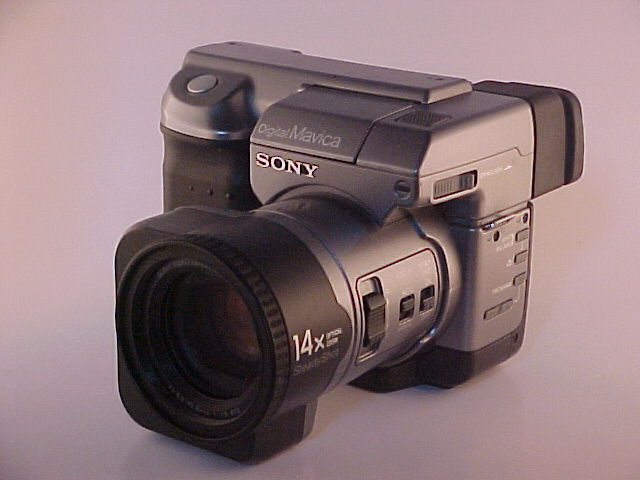
| 52 mm | FD88, FD90, FD91, FD92, FD95, FD97, CD300, CD400, CD500, CD1000 |
| None | FD5, FD7, FD51, FD71 |
The two sizes correspond roughly to the camera tiers:
- 37 mm: Budget and mid-range cameras with 3× zoom lenses
- 52 mm: Higher-end cameras with faster or longer zoom lenses
Compatible filters
UV / Skylight filter
A clear protective filter that shields the front element from dust, scratches, and fingerprints. Many Mavica owners keep a UV filter permanently attached. On a 25+ year old camera, a $5 filter is cheap insurance for an irreplaceable lens.
Polarizing filter (CPL)
A circular polarizer reduces reflections and glare, deepens blue skies, and cuts through haze. Useful for outdoor Mavica photography, especially landscapes. Rotate the outer ring until reflections diminish.
Note: Some early Mavica autofocus systems (FD73, FD75) can be confused by a polarizer. If AF hunts, switch to manual focus.
Neutral density (ND) filter
ND filters reduce light entering the lens without affecting colour. Useful for:
- Shooting long exposures in bright daylight
- Using wider apertures (f/1.8–f/2.0) in sunlight on models with limited shutter speed range
A 3-stop ND (ND8) is the most versatile choice for Mavica use.
Color filters
Red, orange, yellow, and blue glass filters produce dramatic colour effects. Since Mavica images are JPEG with no RAW option, color filters create permanent in-camera effects that differ from digital colour grading.
Conversion lenses
Wide-angle adapter
A 0.7× wide-angle adapter on a 37 mm thread turns a 39 mm equivalent lens into a 27 mm wide-angle. Sony sold the VCL-0637H for exactly this purpose. Third-party equivalents are widely available.
Teleconverter
A 2× teleconverter doubles the effective focal length. On an FD90 with 8× zoom (37–370 mm equiv.), a 2× converter gives you 740 mm equivalent reach at the tele end — though image quality degrades noticeably.
Macro lens
Close-up diopter lenses (+1, +2, +4, +10) screw into the filter thread and allow the camera to focus much closer than its normal minimum distance. A +4 diopter is a good starting point for tabletop photography.
Step-up and step-down rings
If you have filters in one size and a camera with a different thread, step-up rings adapt between sizes:
- 37 mm → 52 mm step-up: Use 52 mm filters on 37 mm cameras (works well, slight vignetting possible at wide angle)
- 52 mm → 37 mm step-down: Use 37 mm filters on 52 mm cameras (will vignette — not recommended)
Step-up rings are cheap ($3–5) and widely available in camera shops and online.
Lens caps and hoods
- Lens cap: Always replace the lens cap when the camera is not in use. Scratches on the front element cannot be repaired.
- Lens hood: Sony made specific bayonet hoods for some models, but a generic screw-in rubber hood in 37 mm or 52 mm works fine and reduces flare.
Practical tips
- Buy a UV filter first — protect the irreplaceable lens element.
- Check for vignetting at the wide end when using thick-rimmed filters or stacked filters. Shoot a test frame of a bright wall to check for dark corners.
- Clean filters regularly — a dirty filter degrades image quality more than no filter at all.
- 37 mm filters are harder to find in shops but abundant online. 52 mm is a standard size with enormous filter variety.
Related Knowledge
Mavica Lens Systems: Sony vs Carl Zeiss
A detailed comparison of the Sony-branded and Carl Zeiss Vario-Sonnar lenses used across the Mavica lineup — optical design, coatings, and real-world performance differences.
Camera TechnologyAperture & F-Stops
Understanding the f-stop numbers listed for every Mavica lens — what they mean for exposure, depth of field, and low-light performance.
Camera TechnologyMacro on Fixed-Lens Cameras
Getting close-up shots on Mavica cameras — using built-in macro modes and DIY lens tricks.
Techniques