CCD Bloom
A sensor overflow artifact where bright light bleeds into adjacent pixels, creating ethereal vertical streaks unique to CCD cameras.
What is CCD bloom?
CCD bloom (also called "smear" or "vertical streaking") occurs when a pixel's charge well overflows from an extremely bright light source. The excess charge spills into neighbouring pixels along the vertical transfer channel, creating characteristic bright streaks that extend above and below the light source.
Why it only happens on CCD
CMOS sensors read each pixel independently, so charge overflow stays localised. CCD sensors transfer charge in vertical columns, meaning overflow propagates along the entire column — producing the distinctive vertical streak.
Creative exploitation
Many Mavica and lo-fi photographers deliberately point their CCD cameras at bright point-light sources (Christmas lights, candles, sun reflections) to produce bloom streaks. The effect is impossible to authentically replicate in post-processing and has become a hallmark of the CCD aesthetic.
Which Mavica models bloom most?
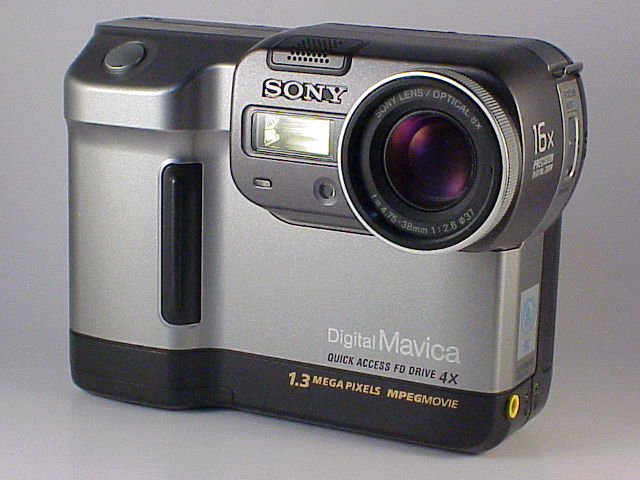
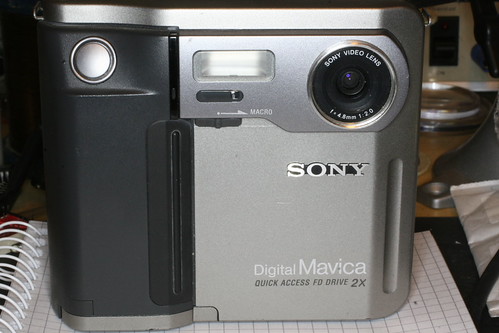
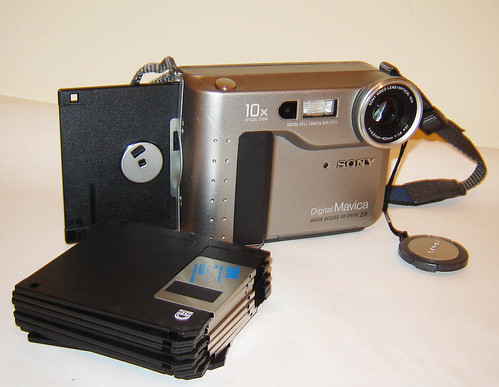
All Mavica models can produce bloom, but the lower-resolution models (FD5, FD7, FD51, FD71) with their smaller pixel wells tend to bloom more easily. The higher-end CD-series models have better anti-bloom circuitry that suppresses the effect.
Tips for intentional bloom
- Point directly at a small, intense light source
- Use night or low-light scenes for maximum contrast
- Lower-resolution Mavica models produce stronger streaks
- The effect is strongest when the light source is small and isolated
Related Knowledge
Long Exposure on Mavica
Techniques and limitations for long-exposure photography on cameras with fixed or limited shutter speed control.
TechniquesHot Pixels & Fixed-Pattern Noise
Why aged CCD sensors develop stuck bright pixels and patterned noise — what causes it, which Mavica models are most affected, and how to manage it.
Camera TechnologyLo-Fi Aesthetic
The intentional embrace of technical imperfection — low resolution, heavy compression, and CCD character — as an artistic choice.
TechniquesCCD Degradation Over Time: Age-Related Sensor Decay
Mavica CCD sensors are 22–28 years old. Over decades, CCDs develop progressive degradation — increased noise, colour shifts, reduced sensitivity, and eventually complete failure. This article explains what happens, how to assess a sensor's condition, and what (if anything) can be done.
Repair & RestorationCCD Sensors
The charge-coupled device (CCD) image sensor that defined the Mavica era — how it captures light and why it produces a distinct look.
Camera Technology